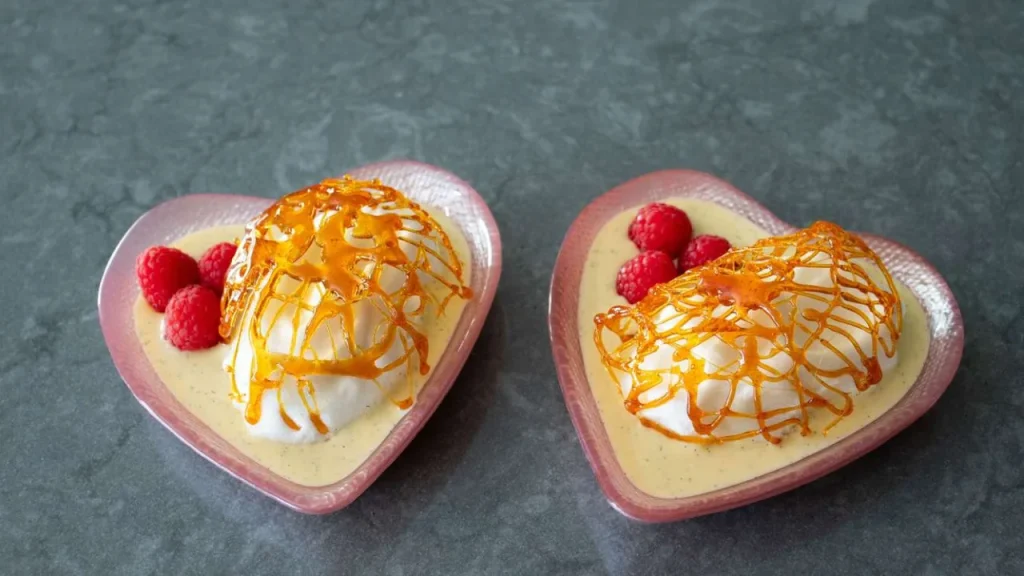

Last Valentine’s Day, my neighbor Sarah knocked on my door looking absolutely panicked. “I told him I’d make a fancy French dessert,” she said, wringing her hands. “I’ve never even made pudding from scratch!” She’d promised her boyfriend something spectacular for their anniversary dinner, and now she was staring down a recipe for floating islands that seemed impossibly complicated.
Twenty minutes later, we were both laughing as perfect white meringue clouds bobbed gently in a pool of golden vanilla cream. Sarah couldn’t believe how simple it actually was – just eggs, sugar, cream, and vanilla creating something that looked like it belonged in a five-star restaurant.
That’s the magic of floating islands with vanilla crème anglaise. This classic French dessert has been fooling people for centuries, looking elegant and complex while requiring nothing more than basic ingredients you probably already have in your kitchen.
The Unexpected Simplicity of French Elegance
Floating islands, known as “îles flottantes” in French cuisine, represent everything beautiful about traditional European desserts. The concept is brilliantly simple: delicate meringue islands floating on a sea of vanilla-scented custard cream.
“What surprises most home cooks is how forgiving this dessert actually is,” says pastry chef Marie Dubois from Le Bernardin. “You’re working with the most basic elements – egg whites, sugar, and cream – but the result feels like pure sophistication.”
The dessert traces its roots back to 18th-century French kitchens, where resourceful cooks discovered that separating eggs and treating each component differently could create something extraordinary. The whites become airy, cloud-like meringues, while the yolks transform into silky custard.
What makes floating islands particularly appealing for modern home cooks is the minimal ingredient list. You need just one egg per serving, some sugar, cream, milk, and vanilla. Most recipes serve two people perfectly, making it ideal for intimate dinners or romantic occasions.
Breaking Down the Technique
Creating perfect floating islands relies on understanding a few key techniques that ensure success every time. The process involves three distinct phases: preparing the vanilla base, creating stable meringue, and the gentle poaching process.
Here’s what you need to know about each component:
- Vanilla Base: Split a vanilla pod and scrape the seeds into cream and milk mixture for authentic flavor
- Meringue Islands: Whisk egg whites with just a pinch of salt until foamy, then gradually add sugar
- Poaching Process: Gently simmer the meringues in the vanilla cream for exactly 12 minutes
- Final Assembly: Strain the poaching liquid to create smooth crème anglaise
| Component | Key Ingredient | Critical Technique | Time Required |
|---|---|---|---|
| Vanilla Base | Fresh vanilla pod | Gentle heating to extract flavor | 5 minutes |
| Meringue | 1 egg white + 2 tbsp sugar | Gradual sugar incorporation | 8-10 minutes |
| Poaching | Simmering cream mixture | Maintain gentle bubble | 12 minutes |
| Crème Anglaise | Reserved egg yolk | Tempering and straining | 5 minutes |
“The secret to perfect floating islands is patience with your meringue,” explains cookbook author James Peterson. “Rush the sugar addition, and you’ll have grainy, unstable whites that collapse during poaching.”
Temperature control matters enormously during the poaching stage. The cream should barely simmer – you want gentle bubbles, not a rolling boil that would break apart your delicate meringues.
Why This Dessert Matters More Than Ever
In our world of complicated molecular gastronomy and Instagram-worthy desserts, floating islands represents a return to fundamental cooking principles. This dessert teaches essential techniques that apply across countless recipes.
Learning to make proper meringue opens doors to pavlovas, macarons, and classic soufflés. Understanding crème anglaise gives you the foundation for ice cream bases, trifles, and elegant sauce work. These skills transfer directly to more advanced pastry techniques.
For busy families, floating islands offers a sophisticated dessert option that doesn’t require special equipment or exotic ingredients. You can make it completely from scratch in under 30 minutes, yet guests will assume you spent hours in the kitchen.
“I’ve served this to dinner party guests who thought I hired a pastry chef,” laughs food blogger Jennifer Martinez. “The presentation is so elegant that people assume it must be incredibly difficult.”
The dessert also addresses growing interest in classic cooking techniques. As more home cooks seek to understand traditional methods rather than relying on convenience products, floating islands provides an accessible entry point into French pastry fundamentals.
Nutritionally, the dessert is surprisingly light. Each serving contains primarily protein from eggs and calcium from dairy, with moderate sugar content compared to many modern desserts. The portion size feels generous while remaining reasonable.
Restaurant trends show renewed interest in classic French desserts, with floating islands appearing on menus at both casual bistros and fine dining establishments. Home cooks who master this technique can recreate restaurant-quality results in their own kitchens.
The versatility factor shouldn’t be overlooked either. While vanilla remains the classic preparation, you can infuse the cream base with different flavors – lavender, citrus zest, or even coffee – creating endless variations on the basic theme.
FAQs
Can I make floating islands ahead of time?
Yes, you can prepare the crème anglaise up to 2 days in advance and store it covered in the refrigerator. The meringues are best made fresh and served immediately.
What happens if my meringue deflates during poaching?
This usually means the cream was too hot or the meringue wasn’t whipped to proper stiff peaks. Keep the simmer very gentle and ensure your whites hold their shape before poaching.
Can I use vanilla extract instead of vanilla pods?
While vanilla extract works in a pinch, fresh vanilla pods provide the authentic speckled appearance and more complex flavor that makes this dessert special.
How do I know when the crème anglaise is properly thickened?
The custard should coat the back of a spoon and hold a line when you draw your finger across it. It typically reaches this stage around 170°F.
Is there a dairy-free version of this recipe?
You can substitute coconut cream for the dairy cream, though the texture and flavor will be different from the traditional version.
Why did my egg whites not whip properly?
Make sure your bowl and whisk are completely clean and grease-free. Even a trace of egg yolk or oil can prevent whites from whipping to stiff peaks.