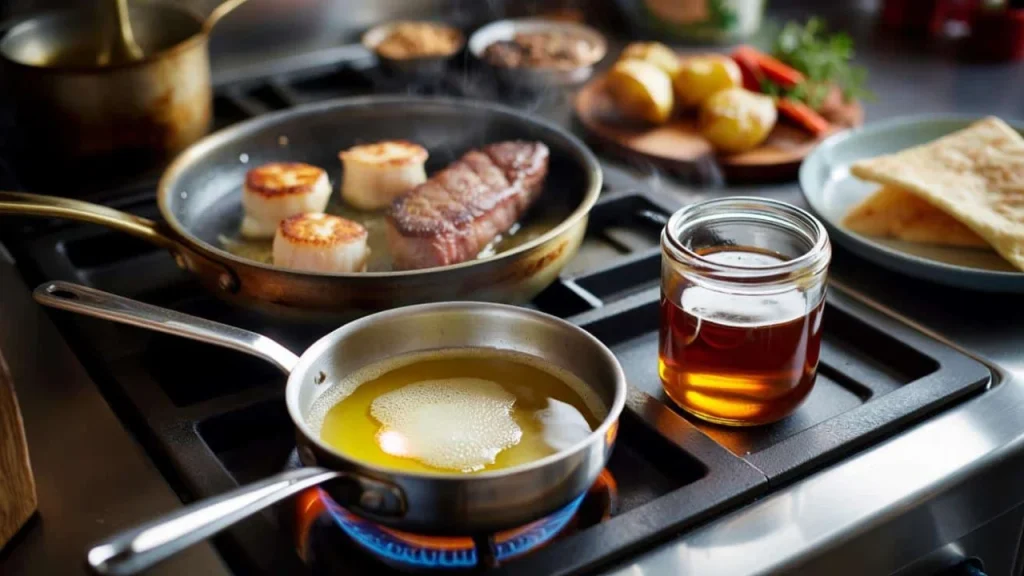

Last Tuesday, my neighbor Sarah burst into my kitchen holding a pan of what looked like burnt scrambled eggs. “I followed the recipe exactly,” she said, nearly in tears. “But everything just turned black and bitter.” I looked at her pan and immediately knew the problem – she’d tried to sear her salmon in regular butter at high heat.
Twenty minutes later, after showing her how to make clarified butter, Sarah was staring at perfectly golden fish with a restaurant-quality crust. “This changes everything,” she whispered, taking her first bite.
She’s not wrong. This simple technique has been quietly revolutionizing home cooking, one kitchen at a time.
The Secret Behind That Golden Glow
Clarified butter might look fancy, but it’s actually butter simplified. Regular butter contains about 80% fat, 15-17% water, and 2-3% milk solids including proteins and sugars. These milk solids give butter its creamy, familiar taste, but they’re also what makes it burn so easily.
When you make clarified butter, you’re essentially editing out the problematic parts while keeping all the good stuff. The process involves gently melting butter, allowing the water to evaporate, and separating out those troublesome milk solids.
“Think of it as butter’s purest form,” explains Chef Maria Rodriguez, who runs a popular bistro in downtown Portland. “You remove everything that makes butter fragile, leaving behind pure, concentrated flavor that can handle serious heat.”
The result is a clear, amber liquid that behaves completely differently in your pan. The smoke point jumps from butter’s modest 302°F to an impressive 482°F. That’s hot enough for serious searing, deep frying, and high-heat roasting without any bitter, burnt flavors.
Why Professional Kitchens Can’t Live Without It
Walk into any busy restaurant kitchen during dinner service, and you’ll spot clarified butter everywhere. It’s not just convenience – it’s necessity.
Regular butter creates chaos in professional cooking. Those milk proteins burn quickly, stick to pans, and turn bitter. In a kitchen where timing means everything, burnt butter can ruin an entire dish and slow down service.
Clarified butter solves these problems beautifully:
- Higher heat tolerance for perfect searing and browning
- Longer shelf life (up to 6 months refrigerated vs. butter’s 1-2 months)
- No burning or sticking at moderate-high temperatures
- Rich, nutty flavor that enhances rather than masks other ingredients
- Beautiful glossy finish on vegetables, meats, and sauces
“We go through gallons of clarified butter every week,” says James Thompson, executive chef at a busy steakhouse. “It gives us consistent results whether we’re searing a delicate piece of fish or getting that perfect crust on a ribeye.”
| Cooking Fat | Smoke Point | Best Uses | Flavor Profile |
|---|---|---|---|
| Regular Butter | 302°F | Baking, low-heat sautéing | Creamy, rich |
| Clarified Butter | 482°F | Searing, roasting, frying | Nutty, concentrated |
| Olive Oil | 375°F | Medium-heat cooking | Fruity, peppery |
| Vegetable Oil | 400-450°F | Frying, high-heat cooking | Neutral |
Making Your Own Liquid Gold
Here’s the beautiful truth about clarified butter: it’s ridiculously easy to make. You don’t need special equipment or culinary school training. Just butter, a heavy-bottomed pot, and about 15 minutes of your time.
Start with good quality unsalted butter – about one pound works well for a decent batch. Cut it into chunks and place them in a heavy saucepan over medium-low heat. This isn’t a race; slow and steady wins here.
As the butter melts, you’ll notice white foam forming on the surface. That’s the milk proteins separating out. Use a spoon or small ladle to skim off this foam. Don’t worry about getting every last bit – perfectionism isn’t required.
Keep heating gently until the bubbling calms down and the liquid turns clear and golden. You’ll hear the sizzling change tone as the water evaporates. The whole process takes about 10-15 minutes.
“The biggest mistake people make is rushing it,” notes culinary instructor David Kim. “High heat will just burn everything. Low heat gives you time to watch the magic happen.”
Let the clarified butter cool slightly, then strain it through a fine-mesh strainer or cheesecloth to remove any remaining solids. Store it covered in the refrigerator, where it’ll keep for months.
How It’s Changing Home Cooking Forever
Social media has turned clarified butter into something of a sensation. Home cooks are discovering what professional chefs have known for years – this simple technique can instantly upgrade almost any dish.
The difference is immediately obvious. Vegetables roasted in clarified butter develop deep, caramelized edges without burning. Fish fillets get restaurant-quality crusts. Even simple scrambled eggs become silkier and more luxurious.
Sarah, my neighbor from the salmon disaster, now keeps a jar of clarified butter in her fridge at all times. “I use it for everything,” she tells me. “Roasting vegetables, cooking steaks, even drizzling over popcorn. My kids think I’ve become some kind of cooking genius.”
The health benefits aren’t insignificant either. Since clarified butter removes the lactose-containing milk solids, many people who are lactose intolerant can enjoy it without issues. It’s also stable at room temperature, making it useful for meal prep and outdoor cooking.
“We’re seeing more home cooks embrace techniques that used to be strictly professional,” observes food blogger Rachel Chen. “Clarified butter is gateway technique – once people master it, they start exploring other restaurant methods.”
The versatility extends beyond just cooking. Clarified butter works beautifully as a finishing oil, drizzled over steamed vegetables or warm bread. It’s excellent for making compound butters with herbs and spices. Some people even use it as a substitute for oil in baking recipes.
FAQs
How long does clarified butter last?
Properly stored clarified butter keeps for 6 months in the refrigerator or 3 months at room temperature, much longer than regular butter.
Can I use clarified butter for baking?
Yes, but you might need to adjust recipes since clarified butter lacks the water content that regular butter provides in baked goods.
Is clarified butter the same as ghee?
They’re very similar, but ghee is cooked slightly longer until the milk solids turn golden brown, giving it a nuttier flavor.
What’s the best butter to use for clarifying?
High-quality unsalted butter works best, as it gives you more control over the final flavor and salt content.
Can lactose-intolerant people eat clarified butter?
Most can, since the clarifying process removes the lactose-containing milk solids, but individuals should consult their doctor.
Why does my clarified butter look cloudy?
Cloudiness usually means some milk solids remain – strain it again through fine cheesecloth or let it settle and pour off the clear portion.